
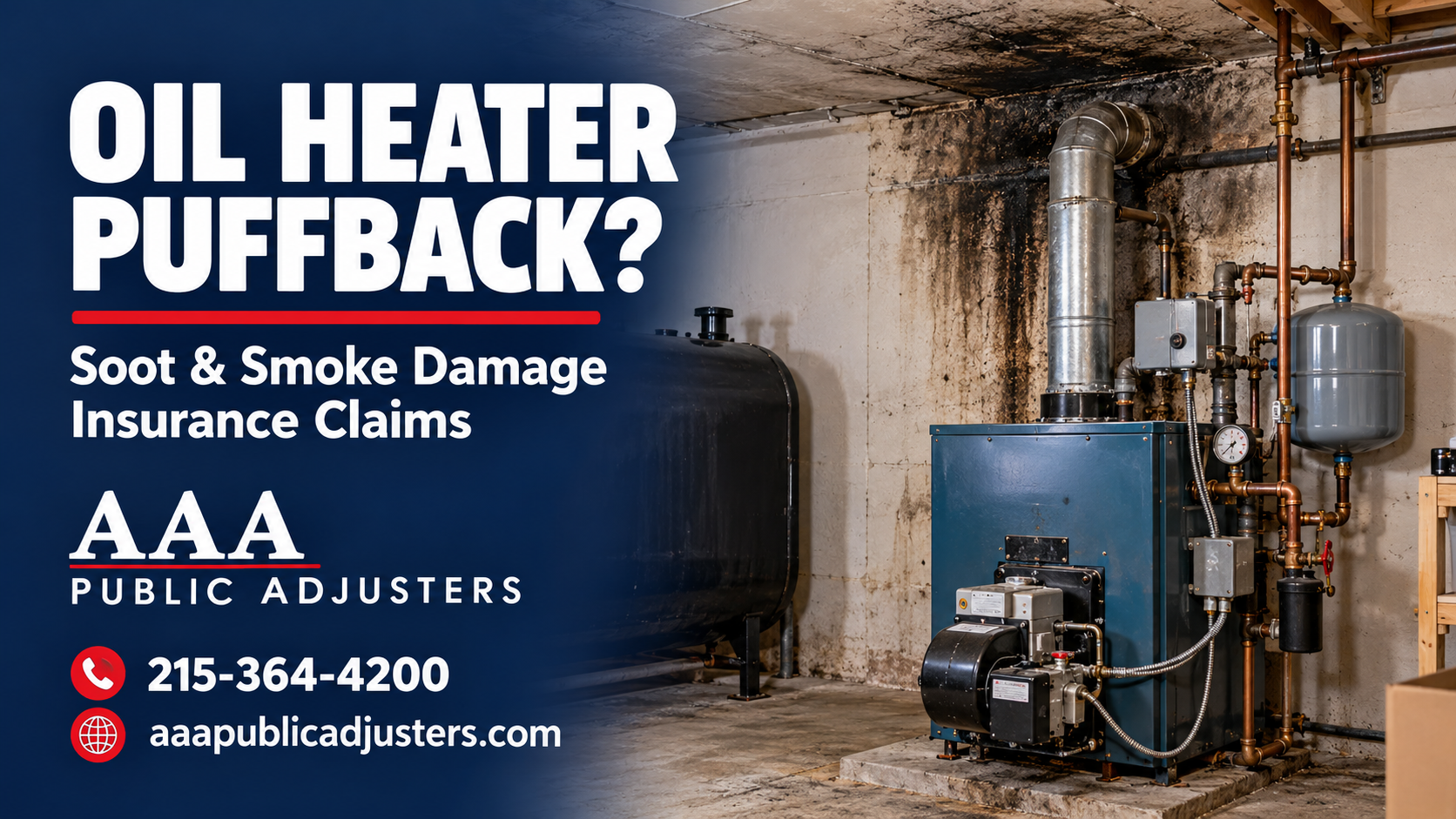
A loud bang from your heater, a strong smoky odor, or black residue on your walls can signal a problem that extends well beyond the heating equipment. An oil heater puffback can spread oily soot through your home, affecting building surfaces, furniture, clothing, and other belongings.
For homeowners in Pennsylvania and New Jersey, identifying the full extent of that damage is an important part of an insurance claim. AAA Public Adjusters helps property owners document the loss, evaluate their policy, and present the damage to their insurance company.
What Is an Oil Heater Puffback?
A puffback can occur when accumulated unburned fuel ignites inside oil-burning equipment, forcing smoke and soot out of the system. Depending on the equipment and the event, residue may escape into nearby rooms or travel through a forced-air distribution system.
Puffbacks are commonly associated with oil furnaces and boilers. An oil-fired water heater can also experience combustion problems. A qualified heating technician should determine the source and cause; black residue alone does not establish that a puffback occurred.
Why Puffback Damage Can Be Easy to Underestimate
The most obvious damage may be a blackened wall or ceiling near the heater. But soot can settle on surfaces farther from the source, including areas that are not immediately visible.
A thorough inspection may need to consider:
- Walls, ceilings, trim, and flooring.
- Closets, cabinets, and shelving.
- Upholstered furniture, mattresses, and rugs.
- Clothing, curtains, and other textiles.
- Electronics and household appliances.
- Ductwork, registers, and HVAC components where contamination is suspected.
Not every item will require replacement. Some materials can be professionally cleaned, while others may require further evaluation. The claim should reflect the condition of each affected item and the work needed to restore it.
What Should You Do After a Suspected Puffback?
Put safety first. If there is active smoke, fire, a carbon monoxide alarm, or an immediate safety concern, leave the property and call 911. Do not restart malfunctioning equipment until a qualified professional has inspected it.
Once it is safe:
- Photograph the damage before cleaning. Capture the heating equipment, nearby surfaces, affected rooms, and damaged belongings.
- Arrange a heating-system inspection. Ask for a written report describing the malfunction, findings, and necessary repairs.
- Report the loss promptly. Follow your policy’s reporting requirements and keep a record of communications.
- Avoid spreading soot. Limit handling of contaminated items and obtain professional advice before attempting extensive cleaning.
- Keep receipts and records. Save service invoices, emergency cleanup bills, and any necessary temporary living expenses.
Documenting the loss should not delay emergency action needed to protect people or prevent further damage.
Does Homeowners Insurance Cover a Heater Puffback?
A homeowners policy may cover sudden smoke or soot damage from a puffback, depending on the policy language and circumstances.
The heating equipment itself and the resulting damage may receive different treatment. For example, a policy may exclude repairing a worn or malfunctioning component while providing coverage for certain resulting smoke damage. Exclusions, endorsements, deductibles, and the cause of loss all matter.
Potential claim expenses may include:
- Cleaning and restoring affected building surfaces.
- Cleaning or replacing damaged personal property.
- Necessary odor treatment supported by the conditions.
- Evaluation and cleaning of affected HVAC components.
- Additional living expenses when the policy provides coverage and the loss makes the home unfit to live in.
An equipment malfunction does not, by itself, answer every coverage question. Request a written explanation of any denial or limitation, including the policy provisions relied upon.
Common Problems With Puffback Insurance Estimates
A claim can fall short when the estimate addresses only the most visible soot.
Items worth reviewing include whether the inspection accounted for all affected rooms, whether contents cleaning was included, and whether the proposed cleaning methods are appropriate for oily residue. If odors remain after cleaning, their source and the need for additional treatment should be investigated.
Ductwork or equipment should not automatically be replaced simply because a puffback occurred. Likewise, a quick visual inspection should not automatically rule out contamination. The scope should follow the evidence.
How AAA Public Adjusters Can Help
AAA Public Adjusters represents policyholders during the insurance claim process. We help organize damage documentation, review estimates, and identify differences between the observed loss and the insurance company’s allowance.
For a puffback claim, that can include reviewing building damage, contents, professional inspection findings, cleanup proposals, and expenses that may fall within the policy.
Our goal is to present a complete, supported claim and pursue the benefits available under your coverage.
Get Help With a Puffback Insurance Claim
If an oil heater puffback has left soot or smoke damage in your home, make sure the claim accounts for more than the area around the heater.
Contact AAA Public Adjusters to discuss your Pennsylvania or New Jersey property damage claim.
Call 215-364-4200
Visit aaapublicadjusters.com


